
Membrane Filtration in Water Treatment: How It Works & Benefits
Without water, life is not possible, and due to limited natural water resources, the need for modern filtration systems is more important than ever. Not only for domestic use, but we also need clean and safe water for several industries. Among different water treatment technologies, membrane filtration has become a go-to option. This advanced method removes impurities, bacteria, and even dissolved solids, ensuring superior water quality.
If you’re looking for a modern technique to remove harmful particles and dissolved impurities without the heavy use of chemicals, this method is the best. Even in highly developed countries like the UAE, the demand for effective treatment systems to secure a sufficient supply of clean water is increasing. Keep reading to learn more about membrane filtration in water treatment, how it works, its key benefits, and more.
Table of Contents
What is Membrane Filtration in Water Treatment
Membrane filtration in water treatment is a modern and highly effective way to clean water. This method uses semi-permeable membranes to physically separate contaminants from water. This can be considered a smart filter that only allows certain substances to pass through while blocking others.
From large particles to microbes and dissolved salts, it removes everything based on the pore size and chemical properties. A main reason that makes it highly popular among several water treatment methods is that we don’t need to use heavy chemicals to secure cleaner and safer water. Different types of membrane filtration are available, and you can choose one based on the level of purification needed.
How Membrane Filtration Works
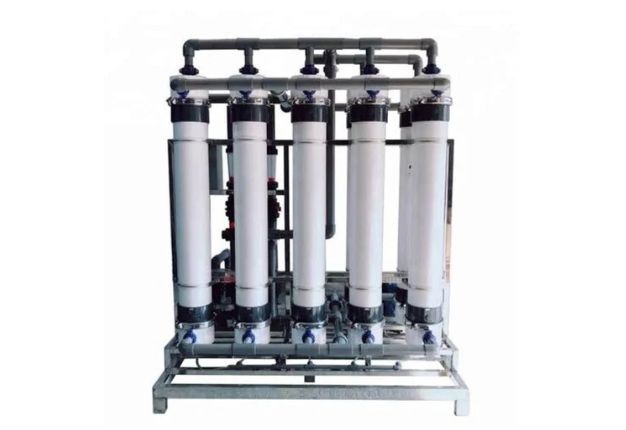
Membrane filtration in water treatment is a smart method to purify water. In this system, the water or any other liquid is pushed through a specially designed membrane under pressure. The membrane acts as a selective barrier, as it only allows water molecules and substances that are small enough to fit through the pores to pass. It holds the unwanted substances, like larger particles, microbes, and dissolved salts.
- Selective Barrier: Each membrane has tiny pores of specific sizes that decide what will pass and what will be blocked. The membrane acts as a physical barrier.
- Pressure-Driven: Under pressure, water passes through the membrane, allowing only small particles and clean water to pass while blocking larger impurities.
- Contaminants Removal: What gets filtered out depends on the membrane type; tighter membranes can block even the tiniest contaminants.
- Two streams: The clean water that passes through is called permeate, while the concentrated leftovers are called retentate.
Moreover, different types of membrane filtration need different pressures. Microfiltration runs at low pressure, while reverse osmosis needs higher pressure to block even dissolved salts. So, you need to choose the right membrane and pressure to achieve the level of purification you need.
Types of Membrane Filtration
Membrane filtration in water treatment is of various types, and each one is designed to offer a specific level of purification. The main difference among all types is how small the membrane pores are; smaller pores can remove finer impurities. Here are the main types commonly used in treating water:
1. Cartridge Filtration
This is usually the first step in a water treatment system, which uses replaceable filter elements to remove larger impurities or particles like sand and rust. It is not a membrane process, but it protects the main membranes and helps them last longer.
2. Microfiltration (MF)
This uses larger pores to remove dissolved solids, bacteria, and other microbes. This process runs under low pressure and is often used as a pretreatment for reverse osmosis or for producing clean drinking water. If you have basic purification needs, this option is effective.
3. Ultrafiltration (UF)
Compared to MF, it uses membranes with smaller pores, so it is used to remove tiny particles, viruses, and colloids. This method is widely used in water treatment, food & beverage, and other industries. As it offers high-quality water without the need for many chemicals, it is a very popular method.
4. Nanofiltration (NF)
This is used to remove dissolved organic matter, salts, and hardness-causing minerals. Generally, it is used to treat hard water and industrial purification. It uses a membrane with very small pores to remove impurities. If you need mid-level purification, this type is a good choice.
5. Reverse Osmosis (RO)
RO is considered the most advanced membrane filtration process. This method uses high pressure to remove all dissolved metals, heavy metals, and other contaminants. RO systems are ideal if you have high-purity water needs, industrial use, and desalination.
6. Electrodialysis (ED)
This special membrane process uses an electric field instead of pressure to remove ions from water. So, this process relies on ion-exchange membranes that separate charged particles.

Cross-Flow Filtration vs. Dead-End Filtration
Membrane filtration works in two main ways: cross-flow filtration and dead-end filtration.
In cross-flow filtration, water or any other liquid flows parallel across the membrane surface. The parallel flow carries away impurities, reducing the buildup of solids on the membrane. Due to its special flow, the system stays cleaner for longer, runs continuously, and gives consistent performance. Moreover, it also needs less cleaning and maintenance. This makes this method a highly popular option for most industries.
Water or liquid flows straight into the membrane in dead-end filtration, and all the impurities stay on the surface. So, over time, the particles that stay on the surface form a layer and slow down the process. This reduces the flow of clean water, which is a main reason it is only used for small or simple applications where the water doesn’t contain many solid particles.
If we compare both these methods, cross-flow filtration is more efficient and long-lasting, but its setup is costly. However, the use of the dead-end filtration method is less common, as it works only for light filtration tasks and requires high maintenance.
Top Benefits of Membrane Filtration in Water Treatment
Among the diverse modern methods used to produce clean and high-quality water, membrane filtration is highly reliable. This advanced separation process effectively removes unwanted particles and keeps the system efficient even with minimal maintenance. Here are the main benefits of this filtration method:
1. Effective Contaminant Removal
This is used to remove a wide range of impurities, from microbes to salts and organic materials. This method makes sure only clean water molecules pass through the membrane. So, if you need extremely pure output, this method is highly useful.
2. Improved Water Quality
Besides removing the impurities from water, it also improves its quality. This is the main reason why it is used in municipal and industrial water treatment, where maintaining high-quality water standards is necessary.
3. Compact Design
These systems have a compact design, so they take up less space. This makes them an ideal option for a workspace where the installation area is limited. Moreover, it also upgrades easily, which means you don’t need to put any major redesign effort.
4. Water Reuse
The biggest benefit of membrane filtration is that it allows treated water to be reused. For example, businesses operating in diverse industries can reuse the treated water for their processes. This not only saves costs but also protects natural resources.
5. Lower Operational Costs
As the membrane filtration systems use fewer chemicals, this makes it not only a cost-effective but also an eco-friendly option. It offers superior performance for both small and large-scale operations. The less chemical use also ensures the safety of workers.
6. Scalable Systems
Another benefit of this water treatment method is that this system can be customized based on your needs. From a small setup to a large industrial plant, these systems provide reliability at every scale.
A Smarter Way to Achieve Cleaner, Safer Water
Undoubtedly, membrane filtration is among the most eco-friendly methods used for water purification today. Its ability to remove various types of contaminants without the heavy use of chemicals makes it a highly popular and eco-friendly option. Businesses in the UAE aim to produce clean water while supporting sustainable practices, and this method helps them move toward more eco-friendly operations.
If you’re looking for a reliable service provider for your water treatment needs, connect with Aventura Components. We provide advanced membrane filtration systems designed for diverse water treatment needs. We help our clients choose the right solutions based on the purification level they require. With our reliable solutions, we promise consistent results and lower operational costs. Whether you need highly purified water output or want to switch to a more sustainable water treatment process, Aventura can help with anything.
Also Read – How Multiport Valves Boost Water Treatment Systems in UAE